Site Map | Search Warsailors.com | Merchant Fleet Main Page | Warsailors.com Home Merchant Fleet Main Page | Warsailors.com Home |
|
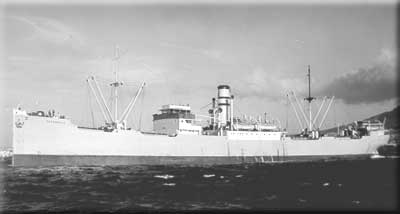
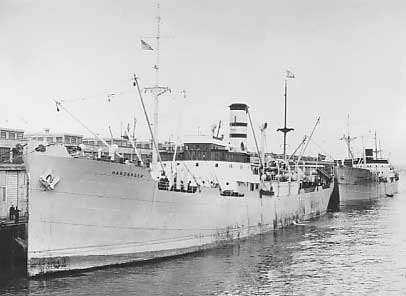
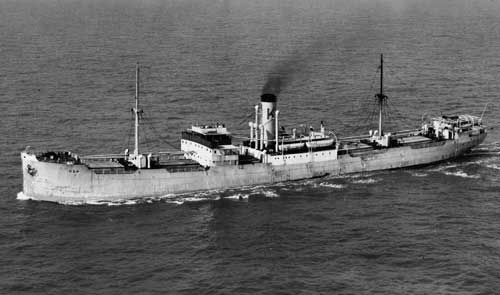
D/S Hardanger To Hardanger on the "Ships starting with H" page.
Manager: Westfal-Larsen & Co. A/S, Bergen Delivered in Apr.-1924 from Lithgows Ltd., Port Glasgow. Captain: Julius Stave. Her voyages are listed on these original images from the Norwegian National Archives: Please compare the above voyages with Arnold Hague's Voyage Record below.
(Received from Don Kindell - His source: The late Arnold Hague's database). Follow the convoy links provided for more information on each (it'll be noticed that some of the external convoys are incomplete). Errors may exist, and some voyages are missing.
As will be seen when going to Page 1 of the archive documents, Hardanger was on her way from Victoria, BC to Antwerp when war broke out in Norway on Apr. 9-1940. She stopped at Falmouth on Apr. 13, later arriving Antwerp on May 6, then returned to Falmouth. According to A. Hague, she now joined Convoy OA 149, which sailed from Southend on May 16 and also included the Norwegian Bencas and Madrono. Hardanger started out from Falmouth on May 18 and arrived New York June 2, having been detached from the convoy (though it's possible she did not join it at all? See Voyage Record above). She headed back to the U.K. again in Convoy HX 52 from Halifax on June 21, bound for Swansea with steel and scrap iron, station 32. At the end of July, she's listed, together with Knoll, Somerville, Stargard and Taborfjell, in Convoy OB 192, which originated in Liverpool July 31 and dispersed Aug. 4. Hardanger's destination is given as Hampton Roads, but she arrived Sydney, C.B. on Aug. 11, proceeding to St. John, N.B. a couple of days later, where she stayed for quite a long time, before heading to Halifax on Sept. 6, and from there, she joined Convoy HX 72 on Sept. 9 (Simla and several others were sunk - follow the links for details). Hardanger arrived Cardiff on Sept. 26, the convoy having been dispersed on the 21st. At the end of the following month, she appears in station 42 of Convoy OB 237, which originated in Liverpool on Oct. 31 and dispersed on Nov. 2, Hardanger arriving Sydney, C.B. on Nov. 11 (having sailed from Milford Haven on Oct. 30). Direct links to the OA and OB convoys mentioned here have been provided within the table above - Bur, Sama and Senta are also named in OB 237. With a cargo of steel and lumber, Hardanger joined Convoy HX 98* from Halifax on Dec. 22, but this convoy only went as far as Sydney, C.B., with arrival there on Dec. 29 (possibly due to raider activity), and from there she later joined a convoy which has been given the designation HX 98/1* by A. Hague, departing Sydney, C.B. on Jan. 2-1941, arriving Liverpool on the 17th; Hardanger stopped at Oban on the 16th. In Febr.-1941, we find her in Convoy OB 291, originating in Liverpool on Febr. 27, dispersed March 3. Note, however, that A. Hague has added a note for Hardanger saying "probably this convoy" - again, see the link within the table above. Caledonia, Grena, Hilda Knudsen, Laurits Swenson, Skaraas (damaged by bomb, follow link for info) and Storaas (also damaged), as well as the Panamanin Norvik (found under the N's on this website) are also listed. Hardanger arrived Freetown on March 17, having sailed from Oban on Febr. 28, according to Page 1. Having made voyages to misc. ports, she returned to Freetown, and with a cargo of lime juice, she joined Convoy SL 73, which left Freetown on Apr. 27 and arrived Liverpool on May 25 and also included Elg, Fana, Lysaker V, Novasli and Tanafjord (link in Voyage Record). Hardanger's voyages in this period are shown on Page 2. The following month, she's listed in Convoy OB 331, departing Liverpool on June 8, dispersed June 19, Hardanger arriving Sorel June 23 (her destination is given as Montreal). Barbro, Elg, Havsten, Hellen, Ida Knudsen, Solfonn, Torfinn Jarl, Troubadour and Vivi are also listed - again, ref. external link provided in the Voyage Record. Hardanger subsequently headed back to the U.K. at the end of that month in the Sydney, C.B. portion of Convoy HX 136, bound for Hull with a cargo of grain, arriving there, via Loch Ewe and Methil Roads, on July 23. In Aug.-1941, we find her in the westbound North Atlantic Convoy ON 8. Her destination is given as Sydney, C.B., but going back to Page 2, we see that she arrived New York on Sept. 2, having started out from Loch Ewe on Aug. 18. She headed in the other direction again on Sept. 22 with Convoy HX 151 from Halifax, along with the Norwegian Dagrun (station 54), Sama (85), San Andres (105), Meline (43), Morgenen (93), Belinda, Thorshøvdi (53), Sophocles (left the convoy and sailed independently), Tigre (44), Laurits Swenson and Leiv Eiriksson (24). Via Belfast Lough and Barry Roads, she arrived Cardiff on Oct. 11. Later that month, she's listed in station 25 of the westbound Convoy ON 30, which originated in Liverpool on Oct. 26; Hardanger sailed from Belfast Lough on the 27th and according to the archive document she arrived St. John's, N.F. Nov. 8, but A. Hague's arrival date of Nov. 10 might be more correct. The Commodore's narrative is also available for this convoy, and Hardanger is mentioned under Nov. 6, Nov. 8 and Nov. 9, the Commodore saying for Nov. 9, "08:15 - Norwegian ship Hardanger, for St. John's, N.F., left Convoy for Placentia Bay escorted by U.S. Gleaves, 43 08N 51 30W". Christmas that year was celebrated while in Convoy HX 165, which left Halifax on Dec. 15 and arrived Liverpool on the 30th.
On Jan. 23-1942, she left Mersey with 1500 tons general cargo for Kingston, Jamaica, joining the westbound Convoy ON 59*, but encountered a horrendous storm and quite a few of the ships were forced to return to Gourock. She left again on Febr. 2, joining Convoy ON 63*, only to meet a snow storm with gale force winds and again had to return. She finally got away on Febr. 9 with Convoy ON 65* (with the head nurse of Kingston Hospital as passenger), endured 3 storms in 6 days, left the convoy on the 12th(? - should probably be 19th) to continue south to the Caribbean on her own. They had a worrysome full moon after they had passed Crooked Island Passage, east of the Bahamas, so that she had no place to "hide" as she was approaching Windward Passage (between Cuba and Haiti) where they had heard there might be U-boats waiting, but on March 2 there was a full eclipse and she passed the straits in total darkness, arriving Kingston safely the next day.
With a cargo of pulp, Hardanger arrived British waters on Apr. 14-1942 from Kingston, Jamaica, via Halifax to join Convoy SC 77 (cargo is given as sugar in the original convoy document), and was ordered by the Commodore to proceed to Belfast for further orders. Departed Belfast for Milford Haven to join a coastal convoy on Apr. 21 for Southampton which was in ruins on arrival. Unloaded cargo for 10 days and departed Southampton for Cowes on May 2 to wait for a westbound convoy. Experienced an aircraft attack at Cowes and moved to a safer area, where they watched as wave after wave of bombers attacked Cowes. Departed Cowes for Fowey on May 4, took on board 1000 tons of phosphates for New York and left on May 8 for Milford Haven to join the westbound Convoy ON 95*, and arrived New York on May 30. The radio operator says 3 weeks were now spent at Bethlehem Steel, Brooklyn. After having been to the yard, 4 of her holds were panelled by a group of carpenters. While this was going on she was heavily guarded by soldiers, and once the work was completed they took on board 3000 tons ammunition for Montgomery's desert army in Egypt. The boatswain and 2 able seamen payed off at that time; this type of cargo was not popular. She departed New York on July 10-1942 for Hampton Roads and Key West (see Voyage Record and Page 3), bound for Suez, with the ammunition in 4 of her 5 holds. She also had other war materials, as well as cases of beer for the soldiers, and locomotives and other vehicles on her decks (due to the lack of escort vessels at that time they first sailed along the Jersey coast and into Delaware Bay almost to Philadelphia, then into Chesapeake Bay and passed Baltimore before heading south to Hampton Roads where they joined a convoy for Suez via South Africa - with a stronger escort). Together with Para, she's listed in Convoy KS 520 from Hampton Roads to Key West at this time - ref. link in Voyage Record. Ola Johansen says that when off Cape Canaveral, the ship in front of them in the convoy was sunk - possibly Nicaraguan Bluefields? - then another on their starboard side was torpedoed - American Chilore? Damaged, later struck American mine and sank. Then it was the Commodore Ship, J. A. Mowinkel's turn (Panamanian, damaged, later hit American mine and further damaged), all torpedoed by U-576 according to Jürgen Rohwer. The conning tower of a U-boat was spotted, and all the ships nearby, including Hardanger, with her 4" gun and 20 mm Oerlikons, fired at it, while the escort vessels and 2 escorting aircraft dropped depth charges, so that the area around where the conning tower had been seen was a "cascade of water columns" for as long as they could see it. In fact, the U-boat was sunk with all hands - see the external links provided below. The Vice Commodore was eventually able to get the convoy in order again, and the voyage continued to Key West, where a horrendous thunder storm was endured. Via Guantanamo Bay(?), Hardanger arrived Trinidad for bunkers on Aug. 2, departed in convoy on Aug. 4 for Cape Town, arriving Aug. 26 (Ola Johansen says the convoy had been dispersed already on the day of departure, so they made this voyage independently - again, note that some of the dates in his account differ from those found in her Voyage Record and Page 3). Following some engine repairs, she departed Cape Town for Suez on Sept. 3, arrived Oct. 6 and had finished unloading on Oct. 18. Left for Port Said on Nov. 1, arriving the next day - departed again on Nov. 19 for Alexandria, then left for Port Said in ballast on Dec. 17 to pick up war stores meant for Iskenderun, Turkey. Left Port Said in convoy on the 26th and reached Haifa 2 days later, then on to Turkey where they arrived on Jan. 8-1943, stayed for quite a long time, took on a cargo of ore for New York, and departed Iskenderun on Febr. 20. Hardanger was back in New York again at the end of May-1943. Ola Johansen says she had served as Commodore Ship from San Salvador (Bahia), Brasil to New York with Vice Admiral Atkins as Commodore. The summary of Ola Johansens' articles ends here. It'll be noticed, when going back to the Voyage Record above, that A. Hague has her in 3 convoys in this time period. From Bahia to Trinidad she's included in Convoy BT 12 - Østhav is also listed. From Trinidad to Guantanamo he has her in Convoy TAG 61, again with Østhav in company, as well as the Panamanian Norbris (Norwegian managers), and with Astrid, Norbris and Østhav, she's said to have joined Convoy GN 61 from Guantanamo to New York. Related external links: As mentioned above, Hardanger had arrived New York at the end of May-1943 (again, see Page 3). About 3 weeks later, she headed to the U.K., having joined Convoy HX 245 from New York on June 23. Her cargo is given as steel and lumber and she was bound for Immingham, sailing in station 21 of the convoy, arriving Immingham, via Loch Ewe and Methil Roads, on July 10 - see Page 4. The following month, she's listed as bound for Cuba with coke in the westbound Convoy ON 196*, which originated in Liverpool on Aug. 8 and arrived New York on the 21st (Commodore in Montevideo). Hardanger joined from Loch Ewe and arrived Havana on Aug. 30. On Oct. 11, we find her in Convoy SC 144 from Halifax, cargo of sugar for Greenock, where she arrived Oct. 26. This was her last North Atlantic crossing for a while; a month later, she joined Convoy OS 60/KMS 34, which sailed from Liverpool on Nov. 25 and split up on Dec. 7, the Gibraltar bound ships (KMS 34*) arriving there on Dec. 9, while the OS convoy proceeded to Freetown, with arrival Dec. 18 - ref. link in the table above; Gabon, Kaldfonn, Norefjord and Norfalk are also named. Hardanger, carrying war stores, joined from Clyde and arrived Augusta Dec. 15, according to the archive document. In Jan.-1944, she made a voyage from Augusta to Gibraltar, having sailed in Convoy MKS 37, arriving Gibraltar Jan. 22 (scroll down to the 2nd table on my page about this convoy). From Gibraltar, MKS 37 joined up with the Freetown Convoy SL 146, before proceeding to the U.K. as a combined convoy, but Hardanger was not present at that time; she instead headed to Montevideo a few days later, with arrival there on Febr. 20. Having also made a voyage to Rosario and Buenos Aires, she proceeded to Freetown, and from there, she joined Convoy SL 154 to Gibraltar on Apr. 1 (together with Norjerv), arriving Apr. 13, continuing to Lisbon that same day, later returning to Gibraltar in order to join a convoy to the U.S. on May 5. She arrived Philadelphia on May 21, then on June 10 she's listed in Convoy HX 295 from New York (Commodore in Elisabeth Bakke), but returned to port, later joining Convoy HX 297 on June 24, for which Brimanger served as Commodore Vessel. Hardanger was bound for Methil and London with a cargo of grain - see also Page 5. She returned across the Atlantic with Convoy ON 248S*, which originated in Liverpool on Aug. 10 and arrived New York on the 27th; Hardanger, however, joined from Loch Ewe and was bound for Montreal, where she arrived Aug 23, having detached from the convoy around Aug. 20. Not long afterwards, she joined Convoy HX 306, bound for Swansea, again with grain, arriving her destination on Sept. 17. This convoy originated in New York on Aug. 31-1944, but Hardanger joined from Sydney C.B. a few days later. She later proceeded to Alexandria, joining Convoy OS 92/KMS 66, which originted in Liverpool on Oct. 15 and split up on the 25th, the Gibraltar bound ships arriving there on Oct. 26 (KMS 66*), while the OS convoy proceeded to Freetown, with arrival Nov. 4 - Bosphorus, Fernbank, Hermelin and Ragnhild are also listed; see link in the above Voyage Record. Hardanger started out from Milford Haven on Oct. 16 (KMS portion) and arrived Alexandria Nov. 4. Her subsequent movements are shown on Page 5. She did not go back to the U.K. again until Febr.-1945, when she joined Convoy MKS 85*; she started out from Casablanca on Febr. 24, cargo of ground nuts - Heimvard (returned) and Mathilda are also mentioned in this convoy, which sailed from Gibraltar Febr. 24. Early in Apr.-1945, she shows up in the westbound North Atlantic Convoy ONS 46*; her destination is given as Halifax, where she arrived on Apr. 20, having sailed from Belfast Lough on Apr. 2 (Commodore in Ferncliff). Her last Trans-Atlantic convoy voyage was made in Convoy SC 177*, departing Halifax on May 26, arriving Liverpool June 8. Hardanger had a cargo of pit props, and arrived Hull on June 10, having been detached from the convoy on June 7, according to A. Hague. The rest of her voyages are listed on Page 6 and Page 7. As will be seen, she got to go home to Norway in Sept.-1945.
Sold to D/S A/S Ask (August Kjerland), Bergen in Sept.-1953 and renamed Hop. Laid up in March-1958, then sold to Belgian breakers in Sept. Aground off Flushing, Netherlands on Jan. 10-1959 while being towed from Arendal to Antwerp. Refloated on Jan. 11 and taken to Flushing for inspection. Sailed from Flushing in tow on Jan. 14 and arrived at Bruges that same day to be broken up by Van Heyghen Freres. Back to Hardanger on the "Ships starting with H" page. Westfal-Larsen had previously another ship by this name, built in Bergen 1905. Renamed Fulton in 1922 (Rasmus F. Olsen, Bergen). Sold for breaking up in 1960. The company's 3rd Hardanger was delivered in June-1954. Sold to Chile in 1969 and renamed Antarctico, sold to Argentina in 1976 and renamed Punta Lara, sold to Panama in 1980, renamed Sea Gull III. A 4th Hardanger, a tanker, was built in 1972. The text on this page was compiled with the help of: Misc. sources, incl. Westfal-Larsen & Co. fleet list, "Nortraships flåte", J. R. Hegland, "The Allied Convoy System" by Arnold Hague, and personal stories found in misc. "Krigsseileren" articles - ref. My sources.
|
|||||||||||||||||||||||||||||||||||||||||||||||||||||||||||||||||||||||||||||||||||||||||||||||||||||||||||||||||||||||||||||||||||||||||||||||||||||||||||||||||||||||||||||||||||||||||||||||||||||||||||||||||||||||||||||||||||||||||||||||||||||||||||||||||||||||||||||||||||||||||||||||||||||||||||||||||||||||||||||||||||||||||||||||||||||||||||||||||||||||||||||||||||||||||||||||||||||||||||||||||||||||||||||||||||||||||||||||||||||||||||||||||||||||||||||||||||||||||||||||||||||||||||||||||||||||||||||||||||||||||||||||||||||||||||||||||||||||||||||||||||||||||||||||||||||||||||||||||||||||||||||||||||||||||||||||||||||||||||||||||||||||||||||||||||||||||||||||||||||||||||||||||||||||||||||||||||||||||||||||||||||||||||||||||||||||||||||||||||||||||||||||||||||||||||||||||||||||||||||||||||||||||||||||||||||||||||||||||||||||||||||||||||||||||||||||||||||||||||||||||||||||||||||||||||||||||||||||||||||||||||||||||||||||||||||||||||||||||||||||||||||||||||||||||||||||||||||||||||||||