Site Map | Search Warsailors.com | Merchant Fleet Main Page | Warsailors.com Home Merchant Fleet Main Page | Warsailors.com Home |
|
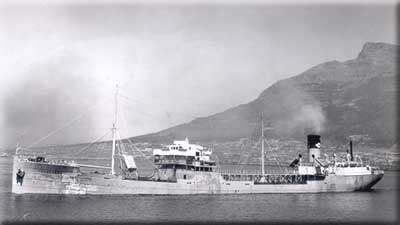
M/T Polartank To Polartank on the "Ships starting with P" page.
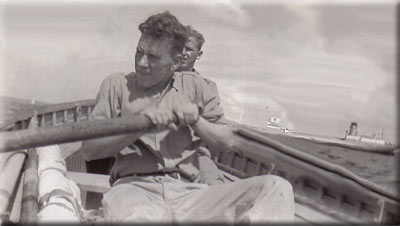
Manager: Melsom & Melsom, Larvik. Built by Barclay Curle & Co., Glasgow (645) in 1930. These men were on board for the duration of the war, without taking a vacation: According to the captain, Polartank transported a total of 308 000 oil/fuel, 38 aircraft, 56 ambulance vehicles, 68 large motor vehicles and 4 small tugs from Oct. 6-1939 until July-1945. They were also equipped to supply the escorts at sea. Related item on this website: Her voyages are listed on these original images from the Norwegian National Archives: Please compare the above voyages with Arnold Hague's Voyage Record below.
(Received from Don Kindell - His source: The late Arnold Hague's database). Follow the convoy links provided for more information on each. Errors may exist, and some voyages are missing.
Part of this narrative is based on a report written by Captain Christiansen, published in "Larviks Sjømannsforening 1849-1949". His information has been supplemented with convoy details found on my own website, as well as in Arnold Hague's database. For information on voyages made in between those mentioned here, please see the documents received from the National Archives of Norway and A. Hague's Voyage Record above. Follow the convoy links for further details; the Commodore's notes are also available for some of them and several Norwegian ships took part. Note that all the unlinked convoys mentioned in this narrative can be found via the external links provided within the table above.
On Oct. 6-1939 Polartank departed Larvik, Norway in order to go to the whale factory N. T. Nielsen Alonso (via Curaçao) to load fuel oil and whale oil. They left the factory again on Febr. 8, and when they were off West Africa they were notified by the company to head for St. Vincent for further orders. 12 days were spent there before they were told to go to Sierra Leone to join a convoy for Manchester. At the convoy conference the captain was called over to the Commodore who reminded him that Polartank had the most valuable cargo of the entire convoy, and advised him to stay right behind him and do his very best to not lose the convoy. He was also given a type written sheet of paper that contained the most important convoy signals, and since none of the deck officers had previous experience with convoy sailing they all came up to the bridge to watch the signals and maneuvers during the first days of the voyage, even when they were not on duty (the captain had sailed in convoys during WW I).
When war broke out in Norway on Apr. 9-1940 Polartank was on her way "up the Manchester canal", and after her cargo had been unloaded she was seized by the authorities, but the captain and some of the company's representatives travelled to London and were able to get her released, and were also given a document from Ministry of Shipping for the attention of all British Consulates to allow the captain the necessary cash for the ship's disbursements in all the ports she may visit (more info on the initial money problems can be found on my page about Nortraship), whereupon they departed Manchester on Apr. 25 (Page 1 of the archive documents gives departure Manchester as Apr. 29). The details in the above 2 paragraphs fit in with the fact that Polartank is listed, together with the Norwegian Snar, in Convoy SL 25, which had left Freetown on March 22-1940 and arrived Liverpool on Apr. 8. Later that month, she's included in Convoy OB 139, which departed Liverpool on Apr. 30 and was dispersed May 3 (May 6?). She was bound for Trinidad in ballast, station 32, arriving her destination on May 15, later making a voyage to Aruba, and from there to Bermuda. She left Bermuda again on June 16, joining the Bermuda portion of Convoy HX 51, bound for Liverpool with a cargo of fuel oil. The following month we find her, with Balduin, Fana, Fenris and Haakon Hauan, in Convoy OB 184, departing Liverpool on July 15, dispersed July 18. Her destination is not given, but going back to Page 1, we learn that she arrived New York on July 28, making another voyage to Aruba on Aug. 22, and from there to Bermuda. According to Arnold Hague, she now joined the Bermuda portion of Convoy HX 71 on Sept. 4. As will be seen when following the link to my page for this convoy, she's not included in the original Advance Sailing Telegram, but the dates do fit with the listing on the archive document. Along with the Norwegian Cubano and Stigstad, she later appears in Convoy OB 229, which left Liverpool on Oct. 15 and dispersed on the 18th. Again, no destination is given for Polartank, but from the archive document we learn that she arrived Table Bay (Capetown) on Nov. 13, proceeding to Port Elizabeth the next day. She went back to the U.K. in Febr.-1941 with Convoy SL 65, which left Freetown on Febr. 10 and arrived Liverpool on March 8; Polartank arrived Swansea, March 9. The Norwegian Belita, Belinda, Fernlane and Morgenen are also named in this convoy, as is Bur (bombed and beached, though may have been in the slow SL convoy - follow link for details). A. Hague has also included Senta. On this voyage, Polartank had rescued survivors from the Dutch Prins Frederik Hendrik (ex Norwegian Taborfjell) after that ship had been bombed by German aircraft on March 8, when on a voyage from Cardiff to Bathurst in Convoy OB 295 (external link), and landed them in Swansea. According to Roger W. Jordan's "The World's Merchant Fleet 1939" there were 16 survivors, 8 had died. Later that month Polartank is listed as bound for Aruba in ballast in Convoy OB 302, which originated in Liverpool on March 24 and dispersed 6 days later. However, according to Page 1 of the archive documents, Polartank arrived New York on Apr. 6, having started out from Milford Haven on March 23; arrival Aruba is not mentioned for this time period (though the document does indicate she was initially bound for Aruba). Alaska, Solstad, Stigstad, Torvanger (Commodore Vessel) and Vivi are also listed in this convoy. She headed back to the U.K. on Apr. 16 in Convoy HX 121 from Halifax, in which the Norwegian Caledonia was sunk - follow the links for details. Cruising order/Commodore's notes are also available for this convoy. In May she's listed, together with Egda, Grey County, Kaia Knudsen, Nova and the Panamanian Norvinn (Norwegian managers) in Convoy OB 319, originating in Liverpool on May 7, dispersed on the 13th, Polartank arriving New York on May 24. She returned to the U.K. in June in Convoy HX 131 from Halifax, bound for Londonderry with Pool oil in station 63, subsequently joining Convoy OB 341A, which originated in Liverpool on July 2 and had Halifax as its final destination. It'll be noticed when following the link to this convoy in the table above that escorts only are named, while merchant ships have been included in the listing for Convoy OB 341, which left Liverpool on June 30 and dispersed July 6 - it looks as though the 2 convoys have been combined on one page (too many ships are named). Her destination is given as Aruba; according to Page 1, she had left Londonderry on July 3 and arrived Las Piedras on the 25th. The following month, we find her in Convoy HX 144 from Halifax, together with the Norwegian Suderøy, Orwell, Hallanger, Eidanger, Havprins, Grena, Evanger, Norse King, Vinland, Ranja and Sommerstad. This convoy left Halifax on Aug. 10 and arrived Liverpool on Aug. 30; Polartank, bound for Milford Haven, stopped at Belfast Lough on the 29th; arrived Milford Haven Aug. 31 - see Page 2. The captain brings up an episode that he's obviously extremely proud of. One night, half way between Iceland and New Foundland the convoy they were in was attacked by U-boats, resulting in the loss of a large U. S. Navy transport with many people on board. He says 6 American destroyers were escorting, all of which went to assist the transport, letting the convoy carry on alone. Early the next morning one of the escorts came back to the convoy taking up position ahead of it, but around noon the Commodore signalled "insufficient protection of convoy, ships of over 12 knots carry on alone at maximum speed - good luck". A little over 20 ships, 2 of which were tankers, broke out of the convoy, and the "race" commenced. Polartank was the first to arrive New York, long before all the others. Captain Christiansen may be talking about Convoy ON 28*, in which Polartank is listed, and in which the fleet oiler Salinas was damaged by U-106 on Oct. 30-1941. According to "Nortraship's flåte" the Norwegian Brant County and Laurits Swenson were also in this convoy (in fact, so were Beth, Grena, Morgenen and Ringstad). This book states that when the convoy was located by U-boats on Oct. 29 the Admiralty redirected it and ordered the fastest ships (including the 3 Norwegian ones) to go on alone. Arnold Hague ("The Allied Convoy System") says the convoy left Liverpool on Oct. 20 and was dispersed in 42 23N 58 44W on Nov. 3. 1 ship damaged (Salinas - ref. external link below for more on this attack). Polartank arrived New York on Nov. 4, having started out from Milford Haven on Oct. 19, according to Page 2. A. Hague says she had been detached from the convoy on Oct. 30. Related external link: She had sailed without noteworthy mishaps until Dec.-1941, when she in the darkness ran into an underwater reef off Halifax, and was considerably damaged, causing the oil to start flowing all over her decks. The captain praises the crew for their courage and actions in the pitch darkness that night in their efforts to stop the leakage (exact date is not given - A. Hague indicates it happened in Nov.-1941). They arrived port without injuries, and she was beached on the inside of the breakwater in the outer harbour. The captain says that after repairs had been undertaken at St. John, N. B. they made 4 round trips New York-U.K.; on the eastbound voyages she was in convoy, and on the westbound voyages she was in convoy half way. Going back to Page 2, we find that she had arrived St. John, N.B. from Halifax on Dec. 2-1941, and did not leave again until Febr. 18-1942. She arrived Halifax the next day, and on March 3 she can be found among the ships leaving Halifax for the U.K. in Convoy HX 178, arriving Liverpool on March 17. Early the following month she joined the westbound North Atlantic Convoy ON 83* (originated in Liverpool Apr. 4), but returned to port (Belfast Lough) and later joined ON 87*, which had left Liverpool on Apr. 16 and was dispersed Apr. 26, Polartank arriving Port Arthur on May 6. Both these convoys had several Norwegian ships, namely Emma Bakke, Katy (returned to port), Kong Haakon VII, Lynghaug, Norheim (returned), Norsol (returned), Olaf Bergh, Siljestad and Tabor in ON 83, and Albert L. Ellsworth, Atlantic, Bralanta, Glittre, Havprins, Herbrand, Katy, Norheim, Norsol, Skandinavia, Stiklestad and Vav in ON 87. Some of these ships, including Polartank, headed back to the U.K. in Convoy HX 193 from Halifax on June 7, and together with Fernmoor, Garonne, Glittre, Havkong, Rio Novo and Samuel Bakke, Polartank went in the other direction again with Convoy ON 107*, bound for New York, where she arrived July 10 (convoy left Liverpool June 26, dispersed July 9). Her subsequent voyages are shown on Page 2; convoy information for some of these can be found in A. Hague's Voyage Record. Her next Trans-Atlantic voyage was made in Sept.-1942, when she joined Convoy HX 206 from Halifax, having been cancelled from the previous convoy, HX 205. She was bound for Glasgow with petrol, arriving there on Sept. 20, then went back to New York again with Convoy ON 133*, which originated in Liverpool on Sept. 25 and arrived New York Oct. 11. She had again been in the company of many other Norwegian ships, namely Anna Knudsen, Athos, Bello, Brimanger, Emma Bakke, Garonne, Grey County, Kosmos II, Minerva, Molda, Noreg, Nueva Granada, Petter II (returned), Polarsol, Sandanger, Skandinavia, Thorshavet, Thorshov, and the Panamanian Norbris (Norwegian managers). Polartank's voyages in this period are shown on Page 3. On Nov. 27 we find her in Convoy HX 217 from New York, bound for Clyde with aviation fuel. This convoy was attacked and 2 ships were sunk; follow link for more details - the Commodore's narrative is also available. Eglantine, Potentilla and Rose are named among the escorts. Polartank was scheduled to return to New York with Convoy ON 155 (see also Commodore's narrative), but instead joined ON 157, for which Skiensfjord served as Commodore Vessel - again, follow the links for convoy details. Polartank arrived New York on Jan. 15-1943, having sailed from Clyde on Dec. 27. She subsequently made a voyage to Aruba and back (convoy info in table above). Captain Christiansen mentions 2 mishaps in the course of 1943, the first taking place off New York while the convoy was being formed. An American ship, loaded with ammunition, came from behind at great speed and ran into Polartank, hitting her in the starboard side near No. 7 and 8 tanks, tearing 2 large holes in her side and causing the oil to run out. Both ships had to return to New York. Polartank had a cargo of aviation fuel, so this encounter with the ammunition vessel could have been quite nasty for both ships. Arnold Hague has her in Convoy HX 227*; in fact, the collison is mentioned in his notes, and we learn that the American ship was Robert Howe. The incident is also mentioned on the Warsailor Stories page, which says it happened in March-1943, but it was probably a little earlier, because Convoy HX 227 left New York on Febr. 18. Acanthus and Eglantine are named among the escorts (see HX convoy escorts), and several Norwegian ships are listed, namely B. P. Newton, Belinda, Ferncourt, Haakon Hauan, Kaldfonn, Mosli, Norholm, Pan Aruba, Skaraas, Stiklestad, Strinda and Thorshov. Polartank had been bound for the U.K. at the time, but as will be seen when going back to Page 3, she later headed to North Africa instead. Michael Onarheim, the author of the story in my "Warsailor Stories" section, says that Polartank had been at a yard for 8 weeks, before heading to Oran with aviation fuel and 16 aircraft on a newly installed extra deck, in a convoy that was attacked several times, losing, among others, the Commodore Vessel and a troop transport. Note that she's listed as bound for Oran in Convoy UGS 7, which originated at Hampton Roads on Apr. 1-1943 and is available via the external link provided within the Voyage Record; Anna Knudsen and Brajara are also included. The American James W. Denver is listed as sunk by U-195. The American Michigan and the French Sidi-Bel-Abbes, carrying over 1000 troops, were also sunk, both by U-565. See the external links at the end of this page for more on these attacks. Polartank arrived Oran on Apr. 20, and returned to the U.S. in May in Convoy GUS 7, again with Brajara in company (link in table above - again, see also Page 3). She arrived New York on May 26, and a few days later she's listed as bound for Bowling in station 31 of Convoy HX 242, which left New York on May 31 and arrived Liverpool on June 15; Polartank stopped at Clyde that day, proceeding to Bowling that same day. Along with Brajara, California Express, Dageid, Fjordaas, Gefion, Høyanger, Lynghaug, Mosli, Norefjord, Norsol, Orwell, Skiensfjord and Tarifa, she now joined the westbound Convoy ON 190* (originated in Liverpool June 24, arrived New York July 9), and according to A. Hague, she collided with the American G. Harrison Smith in this convoy on July 8 - Norsol was also involved in a collision. It looks like repairs had been necessary, because Polartank did not lave New York until Aug. 27, joining Convoy HX 254, bound for Stanlow, where she arrived Sept. 12/13. We subsequently find her in the westbound Convoy ON 203*, which left Liverpool on Sept. 22 and arrived New York Oct. 10. California Express, Dageid, Duala, Gefion, Lista, Norholm, Skaraas, Trondheim, Vav, Vinga and the Panamanian Norlys are also listed. The 2nd incident mentioned by the captain happened in Oct.-1943. This time, in the middle of the night in pitch darkness, an American 20 000 tons Standard Oil tanker rammed her, damaging all the cabins on the starboard side, as well as the starboard lifeboat and both davits. The captain says that what saved the sleeping crew was the fact that the bunks on Polartank were built about 4 ft away from the ship's side. I'm wondering if he remembers the date wrong(?) - as mentioned above, she had been involved in a collision on July 8 that year, and G. Harrison Smith was a Standard Oil tanker (or had she collided again?). Captain Christiansen says that after repairs had been undertaken in New York (again, I believe the captain has skipped a voyage New York-Liverpool and back here, unless she had collided again in Oct.-1943?) they were chartered by the British Admiralty for service in the Mediterranean and The Persian Gulf. They unloaded diesel oil north of Naples 8 days after that city had been taken by the Allies, and during the night they experienced a horrendous air attack which lasted for several hours, with bombs falling all around. The next morning they were ordered away from the place (the captain calls it Pussooli, 16 miles north of Naples) and down to Naples where the rest of the cargo was subsequently discharged.*
In July-1944, I have her in Convoy GUS 47, which left Port Said on July 24; Polartank's voyage information is given as Abadan-Augusta/Naples, and she left the convoy on July 29 (for Augusta), as did the Norwegian Tricolor, which had also joined from Port Said, together with Fernplant, Kong Sverre and Lidvard, while Topdalsfjord later joined from Bizerta. Polartank left Augusta again for Naples on Aug. 10, arriving Naples the next day, returning to Augusta on the 14th, subsequently making 2 more voyages Augusta-Naples. The following month, she's said to have made a voyage from Augusta to Gibraltar in Convoy MKS 61*, which originated in Port Said on Sept. 6 and arrived Gibraltar on the 17th; Polartank had sailed from Augusta on Sept. 11. From Gibraltar, she headed back to the U.S. on Sept. 22, and arrived Baltimore on Oct. 8 (Convoy GUS 52 - ref. link in the table above). Again, see Page 5. She remained in Baltimore for almost a month before proceeding to Philadelphia and on to New York, then returned to service between U.S.A. and the U.K. On Nov. 9-1944 she joined Convoy HX 319 from New York, for which the Norwegian Villanger served as Commodore vessel. Polartank (which had served as Escort Oiler, according to A. Hague) was bound for Mersey and Heysham, arriving Liverpool Nov. 25, Heysham Nov. 26, going back to the U.S. with Convoy ON 269*, which also had Fernwood, Heranger, Orwell, Skaraas, Slemmestad, Sørvard and Thorhild in its ranks. The convoy originated in Liverpool on Nov. 29 and arrived New York Dec. 15; Polartank arrived Philadelphia Dec. 14, having left Heysham Nov. 28. On Dec. 19, we find her in Convoy HX 327 (Escort Oiler), again bound for Heysham, where she arrived Jan. 4-1945. Ivaran served as Commodore vessel for this convoy. She left Heysham again on Jan. 6-1945, joining the westbound Convoy ON 277 (Escort Oiler), which arrived New York on the 23rd. Polartank arrived Baltimore on Jan. 24, and it looks like she had joined from Belfast Lough on Jan. 9 (again, see Page 5). Acanthus is named among the escorts. Polartank subsequently headed back to the U.K. on Febr. 7 with Convoy HX 337 (Escort Oiler), for which Laurits Swenson served as the Commodore Vessel. In March we find her in the westbound Convoy ON 288*, together with Villanger, Viggo Hansteen, Tanafjord, Slemmestad, G. C. Brøvig, Dageid, Heranger and Harald Torsvik (according to "Nortraships flåte", Høyanger also took part, but this ship is listed in the next convoy, ON 289*). ON 288 left Southend on March 2, and arrived New York on March 19; Polartank had again joined from Belfast Lough. The Norwegian commodore, R. G. Bruusgaard was in the British Port Fremantle. A. Hague now has Polartank in Convoy HX 346* (Escort Oiler), which left New York on March 24 and arrived Liverpool Apr. 7 and also included Dageid, G. C. Brøvig, Reinholt (Commodore Vessel), Strinda and Thorshavn. A few days later she's listed, along with Dageid, G. C. Brøvig, Strinda, Montevideo, Noreg, Tai Shan and Thorshavn, in the westbound Convoy ON 296* (from Liverpool Apr. 12, to New York Apr. 30; Polartank arrived Philadelphia that day). Together with Frontenac and Skiensfjord (Commodore vessel), she headed back to the U.K. on May 9 with Convoy HX 355* (Escort Oiler), which arrived Liverpool on May 25; Polartank arrived Immingham on May 28. Her subsequent voyages, up to and including Apr.-1946, are listed on Page 6. As can be seen, she finally got to go home to Norway in March-1946. The captain ends his report by praising his engine crew, saying that although it was often nerve racking for those on the bridge, it must have been a thousand times worse for those who were in the engine room. "Those guys did their duty as heroes. My hat off to them!". Again, for information on Polartank's convoy voyages made in between those already noted on this page, please see A. Hague's Voyage Record.
Sold to Skibs A/S Spervik in 1951, renamed Husvik. Sold to breakers and arrived Grimstad June 9-1959 to be broken up. Related external links: Back to Polartank on the "Ships starting with P" page. Other ships by this name: Norway had another Polartank later on. This ship was originally delivered in Nov.-1966 as Rødskjell from Seutelvens Verksted, Fredrikstad to A/S Ofottank (50/50 ownership Norske Shell - Ofoten Dampskibsselskap), Narvik, 199 gt, coastal tanker. Sold in Jan.-1986 to Norske Shell. Renamed Vestskjell in 1987. Sold in 1989 to K/S A/S Scan Tank, Borgheim, Tønsberg and renamed Polartank, but not for long, because she was sold again in June that same year to K/S Borgheim Shipping and renamed Norsupply. Used in the COB Line in Drammen for deliveries to the fishing fleet in the Barents Sea. Transferred to NIS in Sept.-1991, then sold in Febr.-1993 to Nor Bunker Maritime Co., Ltd., Valletta, Malta, keeping the same name, and in 1995 she was still in service for that owner. (Info from the Ofoten & Vesteraalens D/S fleet list, Finn R. Hansen). Additionally, The Clydebuilt Ships website lists another Polartank (Melsom & Melsom), built in Glasgow in 1953. There's also a picture of the ship. The text on this page was compiled with the help of: "Nortraships flåte", J. R. Hegland, "Larviks Sjømannsforening 1849-1949", a report written by Captain Christiansen, "The World's Merchant Fleets 1939", R. W. Jordan, "The Allied Convoy System", Arnold Hague, and misc. - see My Sources.
|
|||||||||||||||||||||||||||||||||||||||||||||||||||||||||||||||||||||||||||||||||||||||||||||||||||||||||||||||||||||||||||||||||||||||||||||||||||||||||||||||||||||||||||||||||||||||||||||||||||||||||||||||||||||||||||||||||||||||||||||||||||||||||||||||||||||||||||||||||||||||||||||||||||||||||||||||||||||||||||||||||||||||||||||||||||||||||||||||||||||||||||||||||||||||||||||||||||||||||||||||||||||||||||||||||||||||||||||||||||||||||||||||||||||||||||||||||||||||||||||||||||||||||||||||||||||||||||||||||||||||||||||||||||||||||||||||||||||||||||||||||||||||||||||||||||||||||||||||||||||||||||||||||||||||||||||||||||||||||||||||||||||||||||||||||||||||||||||||||||||||||||||||||||||||||||||||||||||||||||||||||||||||||||||||||||||||||||||||||||||||||||||||||||||||||||||||||||||||||||||||||||||||||||||||||||||||||||||||||||||||||||||||||||||||||||||||||||||||||||||||||||||||||||||||||||||||||||||||||||||||||||||||||||||||||||||||||||||||||||||||||||||||||||||||||||||||||||||||||||||||