Site Map | Search Warsailors.com | Merchant Fleet Main Page | Warsailors.com Home Merchant Fleet Main Page | Warsailors.com Home |
|
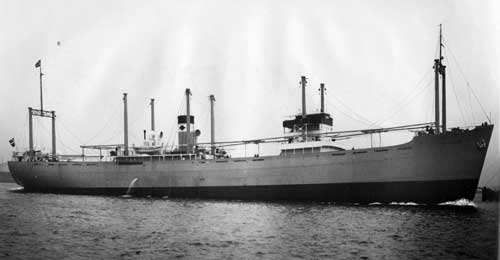
M/S Skagerak To M/S Skagerak on the "Ships starting with S" page.
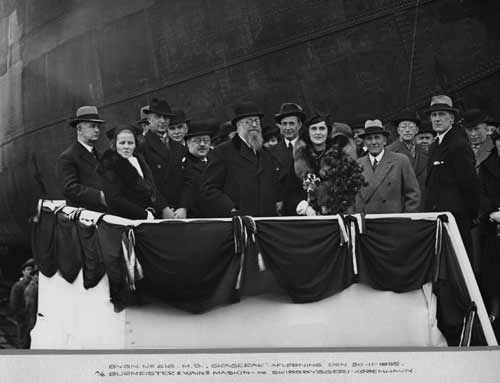
Manager: Olaf Ditlev-Simonsen jr., Oslo Built by Burmeister & Wain, Copenhagen in 1936. Sistership of Kattegat. Captain: According to "19 Oslo-skips historie under verdenskrigen, fra April 1940 til krigens slutt i 1945", Captain was O. Stein at the beginning of the war but he paid off in Sydney in July 1942 and Captain Sam A. Fridvold took over (the latter had previously been the captain of Eidsvold, which had been torpedoed by a Japanese submarine off Christmas Island in Jan.-1942). However, a visitor to my site has informed me that his father, Odd Berglund, was captain of Skagerak from March 1-1942 until July 15 that year, at which time he paid off in Sydney due to illness. He had previously served on Herborg from Oct.-1937 until Jan.-1942, as 1st mate and later as captain. According to this external page, Sam Fridvold joined Skagerak as captain on July 3-1942 and was on board until Apr. 5-1946. 1st mate was P. Keiff. The source mentioned above states that she from April 9-1940 (the German invasion of Norway) until the end of the war, had visited 173 ports, transported 368 869 tons cargo and sailed a distance of 244 684 n. miles. In the same period she had spent 1022 days, 2 hours and 50 minutes on the open sea. Her voyages are listed on these original images from the Norwegian National Archives: Please compare the above voyages with Arnold Hague's Voyage Record below.
(Received from Don Kindell - His source: The late Arnold Hague's database). Follow the convoy links provided for more information on each.
Please compare the details in this narrative with the info found on the various archive documents (it'll be noticed that some of the dates are a little different). See also A. Hague's Voyage Record.
When Norway was invaded on Apr. 9-1940 Skagerak was in the Pacific en route to Japan with a general cargo from the U.S. Naturally, the news was received in stunned disbelief; suddenly they had no country, they could no longer get in touch with their loved ones, and little did they know at that time, as they all sat with their ears glued to the radioes, that many years would pass before they would see them again. Skagerak continued to her destination, arriving Kobe on Apr. 30, where they were met by suspicion and countless "interrogations". Skagerak had 2 more voyages to Japan (Osaka), both times carrying rice from Siam and Indo-China. Her next voyage took her to Calcutta via Miri, Borneo for bunkers. En route, when passing Singapore, she was stopped by British naval forces, but after her papers had been inspected she was permitted to continue. On her next voyage, from Calcutta to South America with jute, she encountered a vessel that had been bombed and sunk by Italian aircraft 240 n miles ahead of her, and the war suddenly came closer - she had no armament on board. But she continued on her original course and reached Cape Town (for bunkers) safely. From Cape Town she proceeded in a zig-zag course, because they had been told there were many German U-boats in the area, and also had German mines to worry about along the coast of S. Africa. She again arrived her destination (Santos) safely, later disharged cargo in Buenos Aires and Rosario, continued to Chile in ballast, then loaded niter in Tocopilla for New Zealand and Australia. On arrival Auckland, New Zealand in Dec.-1940 they learned about a German raider operating in the area. The Rangitane had been sunk and, among others, also the company's own M/S Vinni - follow the link for more details on this. The atmosphere on board Skagerak was rather sad as they left New Zealand on (Friday) Dec. 13. She arrived Sydney 5 days later, continuing just a few hours thereafter to unload at Melbourne. Her voyages in this period are shown on Page 1.
Skagerak now started carrying ore between Whyalla, Port Kembla and Newcastle (N.S.W.); loading took 8 hours, unloading 18 hours. She departed Sydney in a convoy of 5 ships on Jan. 25-1941 (archive doc gives Jan. 27), with the cruiser Adelaide as escort. While en route they heard that a German raider was in the area, only a few n. miles from their course. Suddenly, Adelaide disappeared out of sight at full speed, and 2 n. miles away she put her lights on a large vessel with 2 funnels. They all fully expected to hear canon fire, but it turned out to be a friendly ship, identity not known. After having waited for 5 days near Ocean Island for her turn to load cargo, she was ordered to leave immediately and head for Suva, where she arrived 6 days later. (The Marshall Islands were in Japanese hands at that time, and Skagerak was within reach of Japanese bombers while off Ocean Island, only 300 n. miles away). While at Suva on Febr. 23 that port was the victim of the worst cyclone to hit the place since 1906. Skagerak and another Norwegian ship drifted ashore, but when it was all over she was able to get refloated by herself, and found damages to be minimal. She was escorted back to Ocean Island, and after having taken on board a cargo, she returned to New Zealand, New Plymouth and Wanganui. At the latter port they learned about German espionage going on there. A woman acquired information about the various ships' departures, arrivals and cargoes by inviting officers to her house, asking the appropriate questions, then passing the answers on to the Germans. However, by the time they departed Wanganui she had been arrested. Skagerak's destination was Sydney with orders to take on board a cargo of wheat for Greece, but following the capitulation of that country the cargo was cancelled. They were now told to load flour, but as soon as they had gotten it all on board, they were instructed to get rid of it again, which they did, only to be told to reload it. They had almost completed this operation when they were again instructed to unload. Half of it had been discharged when they were told to stop and wait for further orders. 3 days later they were told to get rid of all the flour and instead load a general cargo for Nauru. This was done and she was ready to leave but developed engine problems, so again had to unload what she had just loaded. Having repaired for 15 days she headed to Newcastle (N.S.W.), and later carried coal, iron ore and general cargoes between Port Adelaide, Whyalla, Port Kembla, Sydney, Nauru, Ocean Island, Geelong, Sydney, Nauru, Brisbane, Nauru, Ocean Island, Lyttleton, Dunedin, Wellington, Wallaroo, Whyalla, Port Kembla and Sydney. On one of her voyages from Nauru (in July-1941) she had evacuated 24 women, the wives of Phosphate Co,'s employees. (The Norwegian M/S Vito and a British ship also helped evacuate women and children - this was due to the general fear of a Japanese attack).
Skagerak continued in the same service until March-1942. In Sydney, a 3" gun was installed, and she also received a Wickers machine gun for protection against aircraft attacks, before heading to Aden. On Apr. 12 she struck a mine when approaching Suez and was badly damaged but repairable; no one was killed. Not long afterwards, while at Ismalia she experienced a German air attack, but she and all the other ships around her escaped harm (contrary to a German report which said several ships had been sunk). On her trip back to Australia via Safaga for phosphates and Aden for bunkers a U-boat was spotted on May 23 and all arms manned, but nothing further came of it. Several Norwegian ships, and others, were later sunk in that same location. She continued to Fremantle and Melbourne, then in convoy to Port Kembla (see Page 3 and link to Convoy OC 6 in the Voyage Record). She subsequently unloaded cargo in Newcastle (N.S.W.), continuing to Sydney to pick up a general cargo for the Middle East. En route she stopped at Fremantle (having sailed in Convoy CO 12 from Sydney, according to A. Hague - link in Voyage Record), Aden and Suez where she unloaded. She now loaded phosphates again in Safaga, from there via Aden for bunkers to Geelong and Melbourne. After having unloaded there she headed to Whyalla and took on board iron ore for Port Kembla. (According to the archive document referred to above, she first returned to Melbourne from Whyalla, departing Melbourne again on Nov. 13 for Port Kembla). On Nov. 15 she was in a convoy of 15 ships (escorted by 6 corvettes, according to the captain's/1st mate's report) off the Australian coast when a Yugoslavian ship on her starboard side all of a sudden went out of her assigned spot and ended up right in front of Skagerak, causing Skagerak's bow to hit her just forward of amidships and complete chaos ensued. Note that A. Hague has included her in Convoy OC 44 from Melbourne at this time (again, ref. external link in Voyage Record), and the Yogoslavian ship is listed as Zvir. Skagerak was damaged, but could continue, while the Yugoslavian ship sank after about an hour; all her men were rescued. Both ships had a cargo of iron ore. As mentioned, Skagerak had been bound for Port Kembla, but now went to Sydney for repairs.
After 2 months of repairing the collision damages in Sydney, Skagerak made the following voyages: Newcastle, N.S.W., Melbourne (A. Hague has her in Convoy CO 63 from Newcastle, see also Page 3), Geelong, Port Melbourne, Colombo, Madras, Calcutta, Madras, Melbourne, Sydney (Convoy OC 90 from Melbourne), Newcastle, Port Adelaide (Convoy CO 93 from Newcastle), Wallaroo, Callao, Tocopilla, Wellington, Geelong, Melbourne, Sydney (Convoy OC 121 from Melbourne) and Brisbane (Convoy GP 66, see also Page 4). From Brisbane, she went to Port Moresby via Townsville (Convoy QL 15) with war stores and other equipment in a large convoy escorted by Australian and American warships and aircraft (she's listed in Convoy TN 162 from Townsville, but this was not a very large convoy - links to all the convoys mentioned here have been provided within the table above). On her return voyage Skagerak sailed alone, but with aircraft escort part of the way. She was 15 n. miles from Port Moresby on Oct. 10 when a powerful column of water suddenly appeared in front of them, while at the same time the ship shook violently. No ships nor aircraft were seen nearby. The incident was reported to the naval authorities who assumed this column of water was caused by the eruption of an "underwater volcano". On a voyage from Cairns and Brisbane to Sydney (in this period, she's listed in Convoys LQ 22 and PG 76), Skagerak had a very narrow escape when the passenger ship Canberra had altered course and came down on her at a 50 degree angle to her course (it'll be noticed, when going to these convoys via the links provided in the table above, that Canberra is not included). Through Skagerak's subsequent evasive maneuver she almost ran into a Liberty ship sailing next to her in the convoy, and the 3 ships were dangerously close for a while, but it all went well and she arrived Sydney not long afterwards to unload her sugar from Cairns. Again, see Page 4 An amazing rendevouz with an old friend: Another voyage with war materials to Port Moresby was made, also stopping at Newcastle, Brisbane, Townsville, Cairns and Gladstone, then back to Brisbane - convoy information for some of these voyages can be found in A. Hague's Voyage Record above. She arrived Sydney again just before Christmas 1943, unloaded cargo, took on board a new one then headed to Colombo. Off Melbourne on Jan. 17-1944 a torpedo passed just behind Skagerak. The culprit was chased, so I assume Skagerak must have been escorted at the time, but I have no further details on what the result of this chase might have been. After having unloaded her cargo in Colombo she returned to Australia and subsequently made 2 voyages to Italy. She made a voyage from Port Said to Augusta in May-1944, having joined Convoy MKS 50, which departed Port Said on May 19 and arrived Gibraltar on the 31st; from Page 4, we learn that Skagerak arrived Augusta on May 25. The following month, she appears in Convoy MKS 51, voyage Bizerta to Bone. This convoy had originated in Port Said on May 30 and arrived Gibraltar June 9; Skagerak, however, had started out from Bizerta on June 5 and arrived Bone the next day. A few days later, we find her in Convoy KMS 52, which sailed from Gibraltar on June 6 and arrived Port Said June 16. Skagerak joined this convoy from Bone, having left that port on June 9, according to Page 5. All these convoys will be added to individual pages in my Convoys section, with more details on each; in the meantime, the ships sailing in them are named in the section listing ships in all MKS convoys and ships in all KMS convoys.
Skagerak was in Augusta again on Jan. 1-1945 and although the Germans were still present in northern Italy the new year was celebrated with fireworks and everything else that goes with such an occasion. All 40-50 ships in port took part with the result that the entire sky was lit up, and good wishes for the year ahead were signalled in morse code from vessel to vessel. Skagerak's cargo was discharged in Bari, which still showed clear signs of the previous explosions (see Bollsta). She continued to Bone in North Africa to pick up phosphates for Australia, then made a few voyages along the coast between western Australia, Victoria and New South Wales. When the news of Japan's capitulation came, Skagerak was just off Makatea, and peace was greeted with all guns, fireworks and whistles, by all ships nearby. By then only 3 of her original crew were still on board. 6 gunners had also been added to her number to help operate her new 4" gun and 6 Oerlikons. By that time 4 rifles, some smoke floats and other defensive equipment had also been included in her armament. From Makatea she went to New Plymouth, New Zealand - again, see Page 5. The document also shows some 1946 voyages, as does Page 6.
1954: J.W. Paulin, A/B Paulin Chartering O/Y- Finland Back to M/S Skagerak on the "Ships starting with S" page. Denmark also had a ship by this name (steam) which sailed for the Ministry of War Transport from 1940, built 1921, 1283 gt - struck a mine and sank on Aug. 24-1941 on a voyage Tyne to Ipswich with coke. There's a seamen named Egdin Knudsen commemorated at Tower Hill, who might possibly be Norwegian (though he could also be Danish). More details can be found on this external page. See also this Guestbook message. The text on this page was compiled with the help of: "Nortraships flåte", J. R. Hegland, "19 Oslo-skips historie under verdenskrigen, fra April 1940 til krigens slutt i 1945" (The story of 19 Oslo ships during WW II), Harald Nicolaisen - 1945, and misc. - (ref. My sources).
|